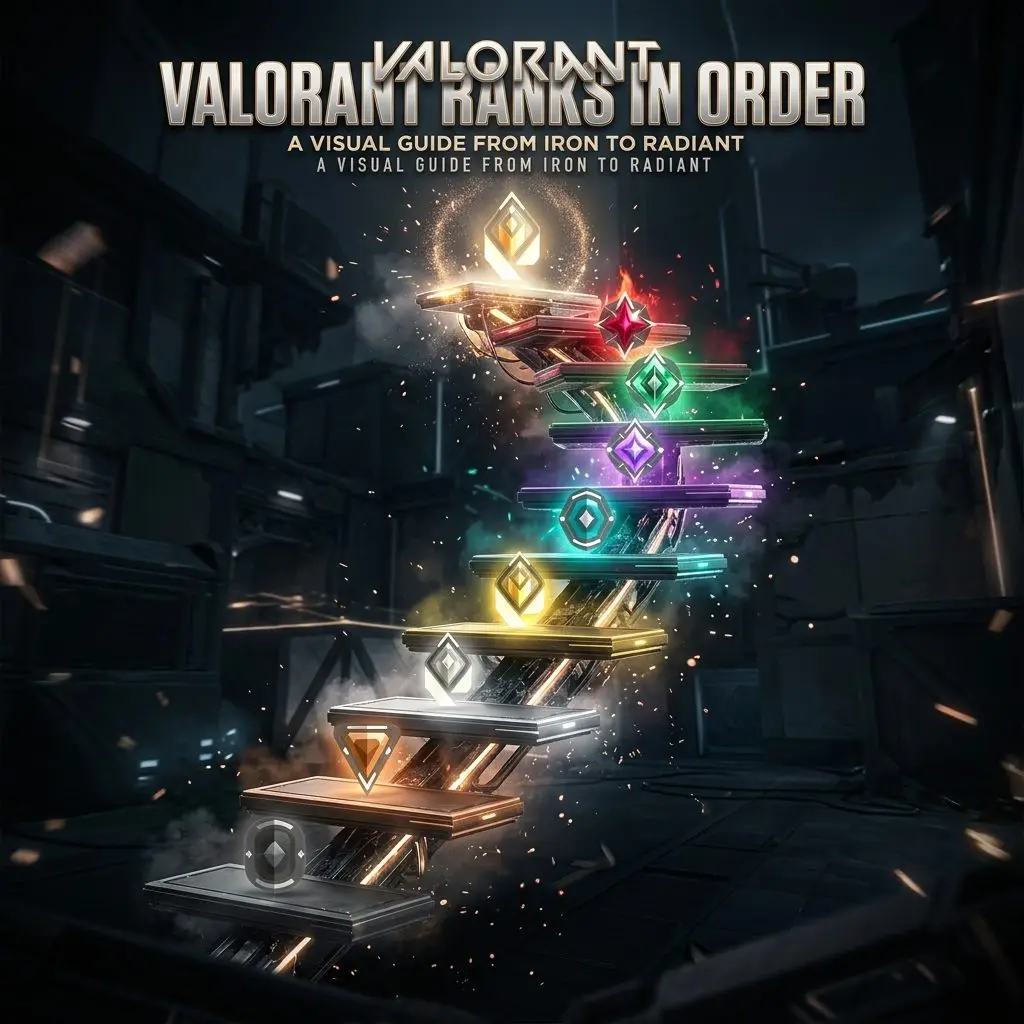
The 9-tier, 25-rank ladder you see today isn’t how Valorant’s competitive system started. The ranks, the top-tier name, and even the division structure have all changed since the 2020 beta. Here’s the full timeline.
Closed beta (April–May 2020): before “Radiant” existed
Valorant’s closed beta ran an early version of Competitive with a rank ladder — but the top rank wasn’t called Radiant yet. It was literally named “Valorant.” Riot later found that confusing (a rank named after the game itself), which set up the rename that came at launch.
Launch (June 2, 2020): no ranked mode at all
When Valorant officially launched, Competitive wasn’t included. Only Unrated and Spike Rush were available at release — Riot held ranked back to keep iterating on it and to let players without beta access learn the basics first.
Competitive returns: patch 1.02, Episode 1 Act 1 (June 24, 2020)
Ranked play launched a few weeks after release, in patch 1.02. This is the first Valorant ranks structure players actually competed in:
- 8 tiers: Iron, Bronze, Silver, Gold, Platinum, Diamond, Immortal — each with 3 divisions — plus untiered Radiant at the top.
- That’s 22 total ranks, no Ascendant yet.
- The old beta name “Valorant” was officially renamed to Radiant to avoid confusing the rank with the game.
Episode 2 (2021): Immortal loses its divisions
Because so few players reached Immortal (roughly 1% of the population), Riot merged Immortal I, II, and III into a single Immortal rank with a regional leaderboard position shown instead of a division number.
Episode 3 Act 2 (2021): Immortal divisions return
Riot reversed course. Immortal I, II, and III came back as standard RR-based divisions, matching how every other tier below it worked.
Episode 5 Act 1 (June 22, 2022): Ascendant arrives
Riot added a brand-new tier, Ascendant, between Diamond and Immortal — the first genuinely new rank since launch. This is the change that separates “old Valorant ranks” from the current ladder: before this patch, there was no Ascendant, and Diamond players promoted straight into Immortal.
With Ascendant’s addition, the ladder reached its current shape: 9 tiers, 25 ranks total (see the full ranks in order breakdown).
Episodes 6–9 (2022–2024): same ladder, tuning only
The 9-tier structure held steady through the rest of the Episode era. Changes in this period were about RR gain/loss tuning and matchmaking, not the rank list itself.
January 2025: Episodes retired for yearly Seasons
Riot dropped the Episode/Act naming convention entirely. Instead of Episode 1, 2, 3… the game now runs on year-based Seasons (Season 2025, Season 2026, informally “V25”/“V26”), each containing six Acts. The competitive mechanics didn’t change — a Season boundary still brings the bigger reset, and each Act inside it is a soft reset — only the label did. If you see an older guide referencing “Episode 10” or similar, it’s using the retired naming.
Where things stand now (Season 2026)
The rank list hasn’t changed since Ascendant was added in 2022: Iron, Bronze, Silver, Gold, Platinum, Diamond, Ascendant, Immortal, Radiant — 25 ranks in total. What has kept evolving act-to-act is RR tuning, queue restrictions, and Act Rank badge rewards, not the tier list itself.
Quick answers
What was the highest Valorant rank before Radiant? During the closed beta, the top rank was named “Valorant” itself — it was renamed to Radiant when Competitive launched in patch 1.02.
When was Ascendant added? Episode 5 Act 1, June 22, 2022.
Were there ever only 8 ranks? Yes — from Competitive’s launch in June 2020 until Ascendant’s addition in June 2022, the ladder had 8 tiers instead of 9.
Related guides
For the current tier list and division rules, see Valorant Ranks in Order. For how RR and MMR work today, read Valorant Ranks Explained.